JavaScript Wordcloud Advertising: A Dynamic Creative Engine for Modern Brand Expression
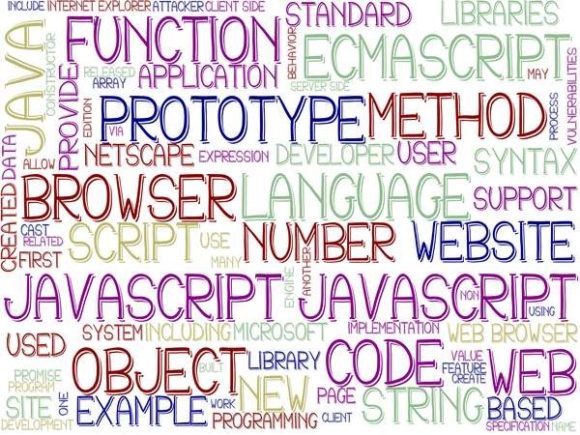
JavaScript Wordcloud Advertising isn’t just a visual gimmick—it’s a responsive, data-informed design paradigm that transforms how professionals communicate value, identity, and intent across physical and digital touchpoints. At its core, it leverages lightweight, browser-native JavaScript libraries to generate dynamic, interactive, and stylistically rich word clouds—visual representations of text where font size, weight, color, rotation, and spacing reflect term frequency, relevance, or strategic emphasis. Unlike static image-based clouds, JavaScript-powered versions adapt in real time: they respond to user interaction, integrate live data feeds, scale gracefully across devices, and embed seamlessly into websites, email templates, dashboards, and even print-ready SVG exports.
More Than Decoration—A Strategic Visual Language
In today’s saturated media landscape, attention is scarce—and authenticity is non-negotiable. Consumers and clients alike increasingly reject one-size-fits-all messaging. They respond instead to signals of intentionality: thoughtful hierarchy, contextual relevance, and visual coherence that mirrors brand voice. JavaScript Wordcloud Advertising meets this need by turning language itself into a design element—where the *words* aren’t just content, but structural components of composition.
This shift reflects broader creative and technological currents. Design systems now prioritize modularity and semantic consistency; marketing stacks demand personalization at scale; and UX practices emphasize clarity over ornamentation. A well-crafted word cloud built with modern JavaScript doesn’t compete with content—it clarifies it. Whether highlighting core service pillars on a landing page, visualizing customer sentiment in a dashboard, or embedding thematic keywords into an invitation’s background, the technique bridges copywriting, information design, and front-end development in a single, cohesive layer.
Fitting Into Evolving Creative Workflows
Professionals—from freelance designers building client websites to in-house marketing teams managing omnichannel campaigns—are rethinking how assets move from concept to deployment. The traditional handoff between designer, developer, and copywriter often introduces friction, delays, and fidelity loss. JavaScript Wordcloud Advertising reduces that friction. Because it’s code-driven and declarative (often configured via JSON or simple API calls), it enables:
- Version-controlled creativity: Word cloud configurations live alongside site code—editable, testable, and auditable.
- Context-aware responsiveness: Clouds can reflow intelligently on mobile, adjust contrast for accessibility, or highlight different terms based on user segment or referral source.
- Real-time relevance: Pull keyword weights from live analytics, CRM tags, or social listening APIs—so promotional banners or email headers stay aligned with current audience interests.
Consider a boutique branding studio crafting a launch campaign for a sustainable fashion label. Instead of designing five static banner variants for A/B testing, they deploy a single JavaScript wordcloud module fed by real-time Instagram hashtag engagement data. Terms like “organic cotton,” “zero-waste,” and “hand-dyed” grow larger as mentions spike—making the ad not only visually distinctive but behaviorally resonant. That same configuration exports cleanly to high-resolution SVG for use on packaging, business cards, or textile prints—ensuring visual continuity without manual recreation.
Why Professionals Are Adopting It Now
Three converging forces explain the growing adoption of JavaScript Wordcloud Advertising among creators and marketers:
- The rise of “content-first” design: Tools like Figma and Webflow have empowered non-developers to prototype interactions—but true dynamism still requires code. JavaScript word clouds sit at the sweet spot: lightweight enough for designers to implement with minimal dev support, yet expressive enough to replace static graphics in meaningful ways.
- Print-and-digital convergence: From stickers and magnets to e-books and social posts, creatives no longer design for a single medium. JavaScript-generated SVG outputs preserve vector fidelity, support CMYK-ready color profiles, and scale infinitely—making them ideal for everything from letterpress business cards to animated Instagram Stories.
- Brand storytelling through semantics: As AI reshapes content creation, human-led curation gains new value. Choosing which words appear—and how prominently—becomes a deliberate act of positioning. A conference program using JavaScript Wordcloud Advertising to visualize session themes doesn’t just list topics; it signals intellectual priorities, community values, and editorial focus—all before a single talk begins.
Practical Applications Across Industries
What makes JavaScript Wordcloud Advertising especially powerful is its versatility—not as a standalone tool, but as a compositional accelerator embedded within existing workflows:
- Promotions & invitations: Generate dynamic event invites where guest names or RSVP responses subtly influence cloud density—creating personalized yet scalable assets.
- Branding & logos: Use weighted keyword sets to inform typographic hierarchy in logo explorations—then export refined SVGs for trademark filing or merchandise mockups.
- Social media & email design: Embed lightweight clouds in newsletters to visualize survey results or trending topics—without bloated images or external dependencies.
- Home décor & textile design: Export clean, layered SVGs for laser-cut wall art or fabric printing—retaining full control over stroke weight, kerning, and negative space.
- Educational & publishing materials: In e-books or interactive magazines, animate word clouds to reveal conceptual relationships—e.g., expanding “climate resilience” as readers scroll into a sustainability chapter.
Crucially, this isn’t about replacing illustration or typography—it’s about augmenting them. A jewelry designer might use JavaScript Wordcloud Advertising to map material origins (“recycled silver,” “fair-trade gold,” “lab-grown sapphire”) into a pendant’s engraved pattern. A UX researcher could visualize usability test feedback directly inside a Figma prototype via an embedded iframe. In each case, the cloud serves as both insight engine and aesthetic anchor.
Technical Accessibility Meets Creative Rigor
One misconception is that JavaScript Wordcloud Advertising demands advanced coding skills. In practice, modern libraries like d3-cloud, WordCloud2.js, or framework-integrated solutions (e.g., Vue-WordCloud or React-Wordcloud) offer intuitive configuration APIs. A typical setup involves:
- Defining a dataset—e.g.,
[{text: "sustainability", weight: 42}, {text: "craftsmanship", weight: 38}] - Specifying layout constraints—rotation range, font family, minimum/maximum font size
- Setting interactivity—hover tooltips, click-through links, or animation triggers
- Exporting to SVG for print or embedding directly into HTML/CSS layouts
This level of control supports professional-grade output while remaining approachable for designers with basic HTML/CSS knowledge. No plugins. No proprietary software. Just open standards, semantic markup, and intentional design decisions.
Looking Ahead—Not Just Trend, But Tool
JavaScript Wordcloud Advertising won’t replace photography, illustration, or motion graphics. But it fills a distinct and growing niche: the need for semantic visuals—graphics whose meaning is derived not from metaphor or abstraction, but from the actual language people use, search for, and trust. As voice interfaces, conversational UIs, and natural language processing become more embedded in everyday tools, the ability to visualize linguistic patterns—accurately, elegantly, and responsively—will only increase in strategic value.
For entrepreneurs launching a new service, it offers rapid visual validation of messaging resonance. For marketers optimizing conversion paths, it surfaces unspoken audience priorities. For educators and publishers, it turns dense textual concepts into navigable visual maps. And for designers committed to craft, it reintroduces language as a foundational material—equal in importance to color, form, and rhythm.
Ultimately, JavaScript Wordcloud Advertising represents a quiet evolution in how we think about communication: less about broadcasting, more about reflecting; less about decoration, more about distillation. When applied with discipline and purpose, it becomes more than a technique—it becomes a lens for clarity, consistency, and connection across every surface your brand touches.